
Psychology of Play and Learning for Children
Children understand the world through exploration and play. Psychologists describe play as a key activity that helps children develop thinking skills, social behavior, and emotional balance. A child interacting with toys, books, and daily objects slowly learns how the environment works.
Learning does not happen only in classrooms. Many important skills are developed during informal moments such as creative play, organizing school supplies, or preparing for school each morning. These everyday routines strengthen independence and responsibility.
Understanding children needs info play helps parents and teachers create environments that support curiosity and learning. Simple items such as drawing materials, building blocks, books, and school accessories can become powerful learning tools.
This article explores how play routines, learning spaces, and everyday objects help children build confidence, responsibility, and readiness for school.
The Psychology Behind Play and Early Learning
Play helps children develop mental, emotional, and social skills. Research in child development shows that play strengthens the brain during the early years of growth.
Cognitive Development Through Play
Play stimulates important thinking processes. According to the American Academy of Pediatrics, play improves memory, creativity, and problem solving.
Children benefit from different forms of play.
- Exploratory play: touching objects and experimenting with materials
- Constructive play: building structures using blocks or toys
- Imaginative play: pretending objects represent something else
Exploratory play strengthens sensory awareness. Constructive play improves logical thinking and spatial understanding. Imaginative play supports language development and creativity.
Simple items such as puzzles, paper, crayons, and books encourage children to experiment and solve problems.
Emotional and Social Benefits of Play
Play teaches emotional control and cooperation. When children play with others, they practice communication and teamwork.
Researchers identify three emotional benefits of play:
- Play reduces stress and improves mood
- Play encourages empathy and cooperation
- Play builds confidence through achievement
Group activities help children learn patience and negotiation. These experiences improve emotional resilience and social skills.
Everyday Objects as Learning Tools
Many learning opportunities come from objects children interact with every day. Ordinary items at home or school can help children build responsibility and independence.
Learning Through Practical Interaction
Children develop practical skills by managing everyday items. School materials, books, and personal belongings teach organization and responsibility.
Examples include:
- Arranging notebooks and books for school
- Keeping stationery organized
- Preparing school items before leaving home
For many Pakistani parents preparing children for school, choosing durable and comfortable school accessories is part of that process. Prices of school bags can be different for different sizes and qualities. When families compare kids school bag prices in Pakistan, they usually consider quality, comfort, and storage space for books and supplies.
A well-designed school bag helps children organize their belongings and carry books comfortably. Managing these small responsibilities helps children develop independence.
Confidence Through Ownership
Children gain confidence when they manage their personal items. Ownership encourages responsibility and discipline.
Examples include:
- Packing a school bag independently
- Keeping books arranged
- Preparing school supplies the night before school
These simple routines teach planning and self management.
Child development specialists explain that small daily responsibilities build confidence and independence during the school years.
Creating a Healthy Playtime Schedule
A balanced routine supports both learning and play. Children need time for creative activities, rest, and physical movement.
Why Routine Supports Development
A structured routine helps children feel secure. Predictable daily activities reduce stress and improve emotional stability.
A healthy routine includes:
- Free play time
- Physical outdoor activity
- Reading or creative activities
- Interaction with family members
Free play allows imagination to grow. Outdoor activity improves physical health and coordination. Quiet activities such as reading strengthen concentration.
Designing a Practical Playtime Schedule
Parents can create a simple schedule that balances school and play.
Example routine:
Morning
- School preparation
- Short creative activity
Afternoon
- Outdoor play or sports
- Homework or reading
Evening
- Quiet play such as drawing
- Family conversation or storytelling
A consistent playtime schedule helps children understand how to manage their time. Over time, children learn to move between activities with less resistance.
Preparing Children for Modern Learning Environments
Education today combines traditional teaching with digital learning tools. Technology is becoming part of modern classrooms.
Should AI Be Used in Schools
The question should ai be used in schools is widely discussed in education research. Artificial intelligence tools can support personalized learning.
Educational AI systems help students by:
- Providing adaptive learning exercises
- Offering personalized feedback
- Supporting language and mathematics practice
However, psychologists emphasize that technology cannot replace physical interaction and play.
Young children learn best through hands-on experiences such as building, drawing, reading books, and interacting with people.
Balancing Technology and Real World Learning
Healthy learning environments combine several elements.
- Creative play
- Structured classroom learning
- Responsible use of technology
- Physical movement and outdoor activity
Teachers and parents both play important roles in maintaining this balance.
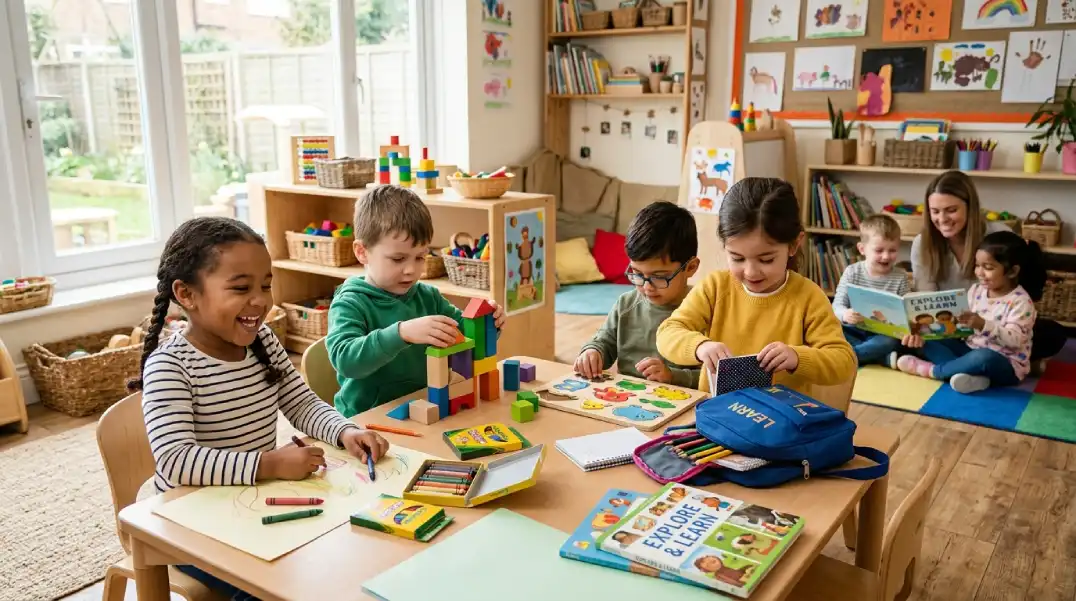
A classroom filled with books, creative materials, and organized supplies encourages curiosity and participation. At home, storytelling, crafts, and shared activities strengthen emotional connections and learning motivation.
Conclusion
Play is central to child development. Through play, children develop thinking skills, emotional control, and social understanding.
Everyday objects contribute greatly to this learning process. School supplies, books, creative materials, and organised learning spaces help children practice responsibility and independence.
A balanced playtime schedule supports healthy development. Free play, structured learning, and family interaction together create a supportive environment for growth.
Modern education includes new tools such as artificial intelligence. However, physical play and real-world interaction remain essential for healthy cognitive development.
By understanding children’s needs in play, parents and teachers in Pakistan can create environments where children feel confident, curious, and prepared for school success.


About Premium Author
This post has been authored and published by one of our premium contributors, who are experts in their fields. They bring high-quality, well-researched content that adds significant value to our platform.
.png)